Sunday, June 16, 2019

The Klamath National Forest is Clearcutting the Siskiyou Crest near Cook and Green Pass

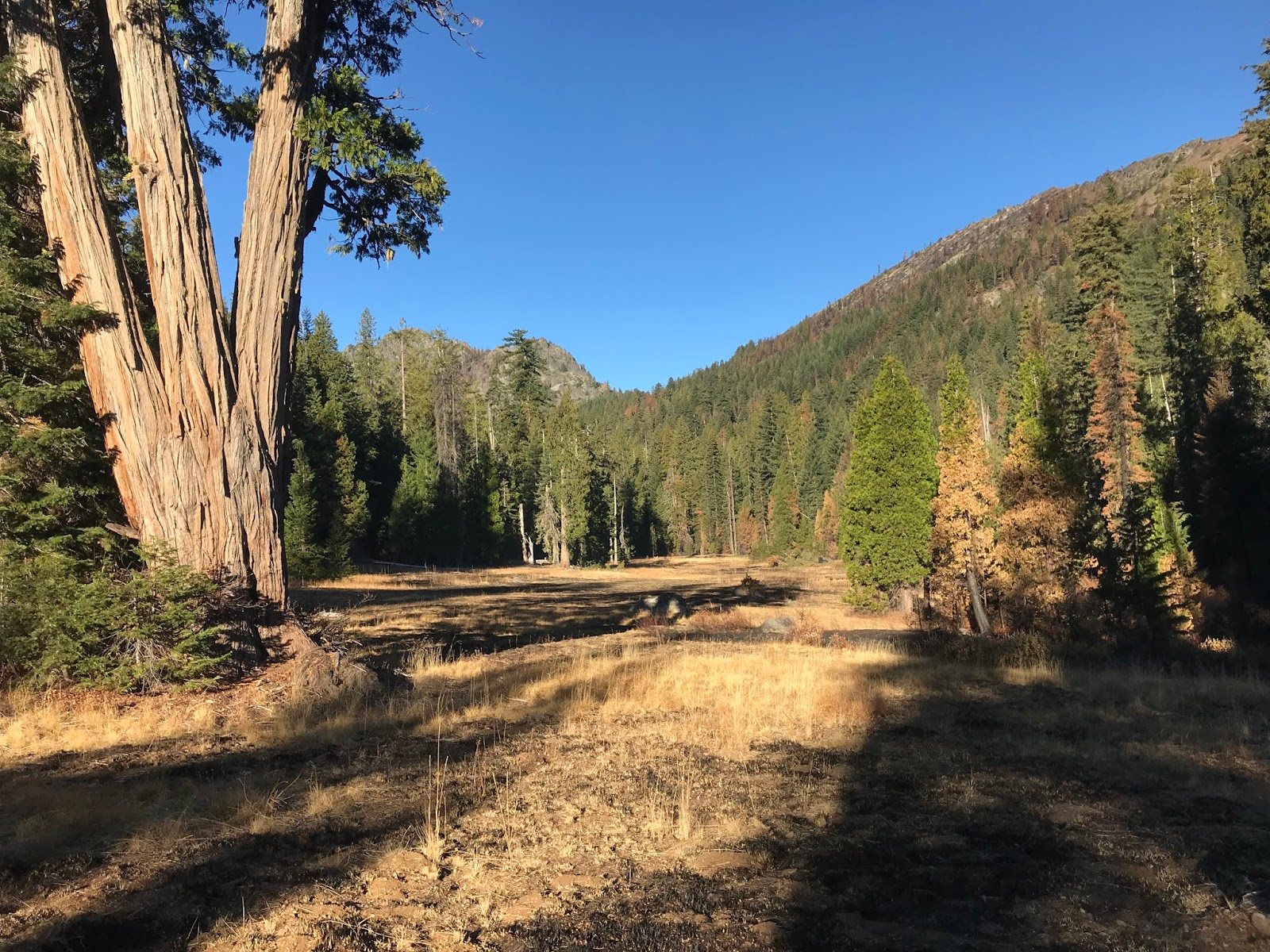
A view southeast from near Copper Butte on the Siskiyou Crest. The Copper Timber Sale proposes to clearcut almost the entire burnt ridgeline in the foreground. The sale extends nearly to the Siskiyou Crest and down the east facing slopes into the headwaters of Horse Creek.
As soon as the smoke cleared from the 2017 Abney Fire, the Klamath National Forest began working to clearcut the region's fire affected forests. As usual, the Klamath National Forest took a very unscientific and opportunistic approach, proposing clearcut, post-fire logging throughout important conservation areas. Klamath National Forest land managers decided to locate much of the proposed timber sale near the spine of the Siskiyou Crest, in and around the Condrey Mountain and Kangaroo Roadless Areas, near the Cook and Green Pass Botanical Area, the Pacific Crest Trail and in a large Late Successional Reserve designated to protect complex, old forest habitat.

The region around Cook and Green Pass has long been cherished for its wilderness quality habitats and incredible biodiversity. In fact, Cook and Green Pass has been identified as one of the most botanically diverse locations in the state of California. It is also at the center of the Siskiyou Crest, one of the most important connectivity corridors in the West Coast. Unfortunately the Klamath National Forest has pushed forward with the Seiad Horse Project, proposing over 1,000 acres of clearcut, post-fire logging in the area. 
Post-fire regeneration and vegetative recovery has begun in timber sale units throughout the project area. Post-fire logging will damage forest regeneration, vegetative recovery, sensitive post-fire soils, and introduce noxious weeds into currently vibrant post-fire plant communities. This photo was taken in the summer of 2018, just one year after the Abney Fire burned through upper Seiad Creek. The native plant response has been both abundant and beautiful.

With the Abney Fire literally still smoldering, the Klamath Forest Alliance and our conservation allies began working to stop this atrocious timber sale. Although we are challenging the timber sale with litigation, the Klamath National Forest is rushing forward to log off the Seiad Horse Project before our day in court. 

Post-fire logging units clearcut by the Klamath National Forest after the 2014 Happy Camp Fire in the Westside Project. This photo was taken in the summer of 2018, four years after the Happy Camp Fire.
Although this situation sounds unfair (and it is), the Klamath National Forest often rushes forward with post-fire logging projects before legal challenges can be fully resolved in court. This has been done on numerous recent post-fire logging projects including the massive Westside Project, following the 2014 Happy Camp Fire. 

For the past few decades the Klamath National Forest has largely used post-fire logging as their defacto timber program. By doing so, they have focused their attention on logging conservation areas that would otherwise be off limits to such blatant, clearcut logging proposals. Instead of thinning dense, fuel-chocked plantations or reducing fuel around communities within or adjacent to the Klamath National Forest, the agency has spent much of the last few decades devastating conservation areas and backcountry habitats with industrial, post-fire logging projects. Unfortunately, Cook and Green Pass may be their next victim.
A forest proposed for logging in the Seiad Horse Project.

To make matters worse, the plantation stands established after post-fire logging have been proven to increase fire severity in future wildfires. They have also been shown to impact late successional habitats, forest complexity, biodiversity, and wildlife habitat. The sediment produced from clearcut logging, yarding, building new roads and constructing large log landings will also impact both water quality and fisheries habitat in Horse Creek and Seiad Creek. 

The Seiad Horse Project consists of three timber sales. The Low Gap Timber Sale on Horse Creek has already been logged, logging  has also begun in the Copper Timber Sale and on the flank of the Siskiyou Crest, while the Pitchfork Timber Sale on Seiad Creek has not yet been subjected to industrial, post-fire logged. Unfortunately, the devastation could begin at any time and shamefully the Klamath National Forest is currently working to log off our wildlands as soon as possible. 

For those of us who love this area, the decision is heartbreaking and for the wildlands of the Siskiyou Crest, it is an absolute tragedy.  Klamath Forest Alliance and our allies will continue our fight for the Siskiyou Crest. We still have hope that legal action can save some of these spectacular fire-adapted forest habitats. We believe the Siskiyou Crest is worth the fight. Please consider making a donation to support our work.

Much of the old forest near Cook and Green Pass area burned at low to moderate severity in the Abney Fire. Yet, the Klamath National Forest is now targeting Bee Camp Road within the Kangaroo Inventoried Roadless Area for "hazard tree" logging. These large old trees will be logged to within 50' of the Pacific Crest Trail and will damage the natural mixed severity fire mosaic.

Tuesday, May 28, 2019

The Impact of Wilderness Bulldozing in the 2018 Fire Season


A bulldozed fireline built across the PCT in the Soda Mountain Wilderness during the 2018 Klamathon Fire. As you can see the fire never reached this fireline and it played absolutely no role in fire containment.
With fire season fast approaching, federal land managers and local politicians are promoting aggressive, industrialized, backcountry fire suppression in our most intact, wilderness landscapes. Many residents in the region are concerned that the landscapes we know and love will be damaged in that process. Being generally rugged, remote and far from human communities, wilderness firefighting is often inappropriate, unnecessary, ineffective, environmentally damaging and extremely dangerous for fire crews.


Last year, fire managers in southwestern Oregon and northwestern California authorized the use of bulldozers in the Soda Mountain Wilderness east of Ashland, the Kalmiopsis Wilderness west of Cave Junction, and in the Siskiyou Wilderness between the Illinois Valley and Happy Camp, California. These authorizations for the use of bulldozers in local wilderness areas demonstrate a trend towards more damaging backcountry firefighting tactics in our region, they also account for as many authorizations as were approved throughout Oregon and Washington over the previous 12 years combined.


A mortar or grinding stone bulldozed in a Native American archeological site.
Last summer, during the Klamathon Fire, BLM and ODF fire crews bulldozed roughly 30 miles across the Soda Mountain Wilderness and Cascade-Siskiyou National Monument, bulldozing straight through streambeds, a number of rare plant populations and numerous Native American archeological sites. These dozerlines were driven extensively, providing vehicle access to the heart of the Soda Mountain Wilderness, compacting soils, creating erosion and spreading noxious weeds. Massive landings were also bulldozed on wilderness ridgelines to create helicopter pads, safety zones, medivac and hoist sites. Wilderness trails such as the Pacific Crest Trail, the Lone Pilot Trail and the Boccard’s Point Trail were bulldozed, degrading the wilderness experience for generations of backcountry enthusiasts and damaging natural habitats.


Ironically, the extensive bulldozing in the Soda Mountain Wilderness played no direct role in fire containment (an estimated 80% was contained with hand built firelines) and numerous bulldozer lines were miles from any fire activity. Yet, while crews bulldozed the wilderness, the weather was shifting, the fire was burning back on itself and had begun running out of steam. This allowed hand crews to “go direct” and build handlines, containing the Klamathon Fire with far less damaging methods than the dozerlines built crudely through the wilderness. 


Although the Klamathon Fire had tragic outcomes in the town of Hornbrook, California, where regrettably homes burned and a life was lost, the fire later burned at low to moderate severity throughout the Soda Mountain Wilderness, creating beneficial fire effects. It was largely the suppression efforts themselves that impacted ecological values, not the natural fire process.


The Klamathon Fire was largely a low severity grass fire within the Soda Mountain Wilderness and Cascade-Siskiyou National Monument. This picture was taken on Scotch Creek in the spring of 2019, less than one year after the Klamathon Fire.


Elsewhere in the region, fire crews for the Klamath National Forest bulldozed the Poker Flat Trail in the Siskiyou Wilderness and portions of the adjacent roadless area during the Natchez Fire. This dozerline was built into some of the most intact habitat on the Siskiyou Crest and again played no role in fire containment. It was built directly through headwater streams, serpentine outcrops, old-growth forests and high mountain meadows. The Natchez Fire burned in a rich and beneficial, mixed severity fire mosaic with substantial low severity fire effects, and once again, the most damaging effects can be attributed directly to suppression efforts.


Forest Service fire managers also twice authorized the use of bulldozers in the Kalmiopsis Wilderness, proposing to bulldoze a high ridge south of the Illinois River and along the Illinois River Trail to Bald Mountain and beyond to South Bend Mountain. Despite attaining authorization, these dozerlines were never created and the Kalmiopsis Wilderness was spared the raw, bulldozed wounds inflicted on portions of the Siskiyou and Soda Mountain Wilderness last summer.

 
A fireline bulldozed across a high mountain meadow in the Siskiyou Wilderness during the 2018 Natchez Fire. This particular dozerline, built within the wilderness, played no role in fire containment.

Wilderness has become an increasingly rare resource and is important in maintaining clean water, biodiversity and wildlife habitat. It is also loved by many in the region and provides an opportunity to experience wild nature and escape the pressures of daily life. According to recent research in the Journal Nature, 77% of the global land base has been altered by economic development, resource extraction and other forms of industrialized land management. In southern Oregon, we are lucky to have significant wilderness landscapes and these landscapes define our region.


Wilderness cannot be replaced or recreated, it plays a vital role in sustaining our region’s ecological values, our sense of place and our quality of life in southwestern Oregon. We would be wise to preserve the wilderness we have left and focus on protecting homes when wildfires occur. 
 
The Natchez Fire burned beautifully through Twin Valley and the surrounding watersheds in the Siskiyou Wilderness. The fire burned in a mixed severity fire mosaic, with mostly low to moderate fire effects. The wild and intact landscapes of the Siskiyou Wilderness are irreplaceable and should be protected for future generations, not bulldozed and degraded in firefighting operations far from homes or communities.

This article originally appeared on May 26, 2019 as a Guest Opinion piece in the Medford Mail Tribune

Monday, May 6, 2019

Klamath Forest Alliance Field Season

The snow pack is beginning to melt in the high country of the Siskiyou Crest.

With the snow beginning to melt in the high country, Klamath Forest Alliance (KFA) is preparing for our upcoming field season. Each season activists with KFA travel across the region monitoring federal land timber sales, grazing allotments, and illegal OHV trails. We roam the backcountry from the Pacific Coast to the interior mountains of the Klamath-Siskiyou. We drive bumpy backroads and hike hundreds of miles both on and off trail, through steep and rugged terrain. We climb mountains and traverse canyons to document proposed project activities and identify potential impacts associated with federal land management projects. 

Bolander's lily
We pack our supplies on our backs, often deep into the wilderness. We sleep on the ground and in the cold. We endure extreme heat, smoke-filled skies, electrical storms, and gully washing downpours. We trip, we fall, we sweat, we bleed; we are drilled by ticks, stung by ground nesting yellow jackets and eaten alive by mosquitoes. Yet, ultimately, we are also privileged to serve and defend the Klamath-Siskiyou! We are grateful for the time we spend in the field, defending the Klamath-Siskiyou and enjoying the region's spectacular beauty and diversity. The hardships endured build bonds with the land and the information gathered strengthens our advocacy. 
Recent post-fire monitoring in the Soda Mountain Wilderness revealed beautiful fire effects and spectacular vegetative recovery in the Scotch Creek Watershed. 

Our comprehensive monitoring programs give us intimate knowledge of proposed land management projects. The information gathered during on-the-ground monitoring activities informs our campaigns, outreach efforts, public comments, administrative appeals, and if necessary litigation. Our approach is science-based, site specific, comprehensive and effective. 

If you appreciate the work we do and the effort it takes, please consider making a generous donation to support our field monitoring season. We will crash through the poison oak and brave swarms of mosquitoes—all you have to do is click on this donation link and contribute a few bucks to be a part of the effort. 

Deep in the heart of the Marble Mountains Wilderness, the first snow fell on us while conducting fire monitoring for the 2014 Happy Camp Fire Report. Rain, snow or shine, KFA will be out defending our public lands!

At KFA, we think on-the-ground monitoring is one of the most important things we do. 


The Siskiyou Field Office of Klamath Forest Alliance will be conducting on-the-ground monitoring for the following federal land management activities in 2019:

Proposed Timber Sales:

  •  The Middle Applegate Timber Sale: The Middle Applegate Timber Sale is located in the Applegate Valley of southwestern Oregon on Medford District BLM land. The Wellington Butte Roadless Area (also known as Wellington Wildlands) is located within the planning area and KFA is concerned that the BLM may propose logging within the roadless area. The project is in pre-scoping and no formal proposal has currently been produced. KFA will be monitoring the proposed units as soon as they are identified.
  • The Briggs Creek Timber Sale: The Upper Briggs Project is located in Briggs Creek, a major tributary of the Illinois River and west of Grants Pass, Oregon. The entire timber sale burned in the 2018 Klondike-Taylor Fire, sustaining mostly low to moderate severity fire effects. Many timber sale units underburned at low severity, yet the agency tells us they are still at risk of "catastrophic fire." The agency has released a decision on this project and KFA is currently working on an Administrative Objection. We will also be conducting field monitoring to document fire effects and vegetative regeneration following the 2018 fires. 


Post-Implementation Monitoring:
  • The Seiad Horse Post-Fire Logging Project: This large post-fire logging project is located on the Klamath River above Seiad Valley, California on the Siskiyou Crest. The project proposes to clearcut forests affected by the 2017 Abney Fire. KFA and other conservation allies currently have portions of the project under an injunction and are litigating to stop the project from moving forward. Unfortunately, portions of the project were logged before an injunction could be secured and KFA will be monitoring those units to document the ecological impacts.
  •  Horse Creek Post-Fire Logging: The Horse Creek Project is located on the Klamath River above Horse Creek, California, also on the Siskiyou Creset. The project was implemented by the Klamath National Forest in 2017 and 2018, after the 2016 Gap Fire. KFA will be conducting post-implementation monitoring to document the ecological impacts.


OHV Monitoring:
  • OHV monitoring on the Rogue River-Siskiyou National Forest and Klamath National Forest: KFA will be working with conservation partners at Applegate Neighborhood Network to monitor OHV activity on the Siskiyou Crest and in designated Botanical Areas. Our monitoring activities will occur on the Klamath National Forest in northwestern California and on the Rogue River-Siskiyou National Forest in southwestern Oregon, and are used to advocate for closure of illegal and ecologically damaging OHV trails.
  •  OHV monitoring on the Medford District BLM: KFA will be working with conservation partners at Applegate Neigborhood Network to monitor OHV activity on the Medford District BLM, including within roadless areas, Lands with Wilderness Characteristics (LWC) and in biodiversity hotspots. Our mointoring is used to advocate for closure of damaging OHV trails.


Grazing Allotment Monitoring:
  • Siskiyou Crest Grazing Allotments: Along with our partners at the Grazing Reform Project, KFA will be conducting ongoing monitoring of grazing allotments on both the Klamath National Forest in northern California and the Rogue River-Siskiyou National Forest in southern Oregon. Our ongoing monitoring activities document environmental impacts associated with public land grazing. We use this information to advocate for reform of public land grazing practices and prepare for future updates to grazing plans on the Siskiyou Crest. 

Wildfire Monitoring

  • Klamath-Siskiyou Wildfire Monitoring: Each summer KFA monitors the wildfires burning in the Klamath-Siskiyou Mountains of northern California and southern Oregon. We monitor fire suppression activities, especially in roadless areas, wilderness areas, botanical areas and other important habitats. After the fires have been extinguished we explore the fires and their ecological effects. The information is used to advocate for the reform of fire suppression policy and strategy, as well as to publish detailed fire reports.


Help us put our best foot forward, donate to KFA! Even when sore, dirty and covered in soot from post-fire monitoring, we are happy to work for the Klamath-Siskiyou.


Monday, April 15, 2019

KFA Report: Klamath-Siskiyou Northern Spotted Owl Impacts 2013-2018

The northern spotted owl is an iconic species of the Pacific Northwest that is currently declining at a precipitous rate throughout most of its range.
The Northern spotted owl is an iconic species of the Pacific Northwest and a habitat specialist utilizing late successional and old growth forests from western British Columbia to northwestern California. Although inquisitive and gentle in its demeanor, the Northern spotted owl has become fiercely controversial throughout its range, and the old forest habitat that it depends on has been in steady decline.

Between 1950 and the mid-1990s, the timber industry and our federal land management agencies liquidated the owl's ancient forest habitat across the West Coast and throughout its range. During this period of widespread clearcut logging, on both public and private land, the once-vast tracts of ancient forest in the Pacific Northwest were dramatically reduced, creating islands of complex forest habitat in a sea of young plantation stands. Much of the most important Northern spotted owl habitat at low elevations, on favorable slope positions, and in productive forest habitat was the first to be logged, and once removed, these old forest habitats take hundreds of years to regenerate into the complex, old forest the Northern spotted owl requires for nesting, roosting and foraging (NRF) habitat. 

Given the long periods of time required to regenerate high quality Northern spotted owl habitat, the loss of habitat associated with historic and contemporary logging has become a semi-permanent impact and continues to limit population viability.


In 1990, with the species declining throughout its range and much of its habitat heavily fragmented, the Northern spotted owl was listed as "threatened" under the Endangered Species Act (ESA). The listing of the Northern spotted owl significantly altered the trajectory of public forest lands by limiting the rate of old-forest logging. Yet, in recent years, the downgrading, degrading and removal of suitable Northern spotted owl habitat in federal timber sales has become increasingly routine. 

Along with other serious and compounding threats such as competition from barred owls, anticoagulant rodenticide use associated with trespass marijuana operations, and climate change, habitat loss from commercial logging has pushed the owl to the verge of extinction throughout large portions of its range. Scientists have found that the majority of suitable habitat in the upper third of the Northern spotted owl's range and in the Oregon Coast Range is currently unoccupied (Dugger et al. 2016), and new research predicts that the Northern spotted owl could go extinct in portions of its range within a few short decades (Yackulic et al. 2019).

While most of the population is in a free fall, Northern spotted owl populations in the Siskiyou Mountains, which were thought to be relatively stable in 2013 and currently play a critical role in maintaining population viability, are also significantly declining (Duggar et al. 2016). Yet, the rate of population decline in northwestern Oregon and western Washington is roughly twice as steep as declines in the Klamath-Siskiyou Mountains. Northern spotted owl occupancy is also higher in the Klamath-Siskiyou than in Washington, the Oregon Coast Range and much of the Oregon Cascades (Duggar et al. 2016). In fact, the Klamath-Siskiyou Mountains in both Oregon and California and the adjacent North Coast of California maintain the strongest "source populations" of Northern spotted owl remaining on the West Coast. These source populations represent the "principal zones of productivity" for the Northern spotted owl and are vital to Northern spotted owl recovery by encouraging dispersal into otherwise unoccupied habitat and by augmenting at-risk populations (Schumaker et. al. 2014).

The mixed conifer forests of the Klamath-Siskiyou Mountains are "source" populations for the Northern spotted owl and are very important for population viability throughout the owl's range. This particular stand was targeted by the Medford District BLM for heavy industrial logging in the Pickett West Timber Sale. KFA monitoring identified this as a unit of concern and it was later withdrawn from the Pickett West Timber Sale.

With the stakes higher than ever before and the threats closing in on whole populations of the Northern spotted owl, our federal land managers have continued to downgrade, degrade and remove suitable habitat. US Fish and Wildlife has also approved literally hundreds of "take" permits in our region, allowing land managers to implement timber sales and other land management projects that are expected to harass, harm, displace or kill Northern spotted owls by severely degrading habitat conditions. 

Recently, Klamath Forest Alliance (KFA) conducted a detailed analysis of all timber sales and land management projects conducted on federal land in the Klamath-Siskiyou region from 2013 to 2018. This included the Klamath, Six Rivers, Mendocino, Shasta-Trinity and Rogue River-Siskiyou National Forests, as well as the Medford District BLM. 

Modeling simulations included in the 2012 Final Critical Habitat Analysis estimate that 2,680 Northern spotted owls may be present in the Klamath-Siskiyou region (assuming each female is part of a pair). From 2013 to 2018, federal land managers in the Klamath-Siskiyou Mountains received 211 Northern spotted owl take permits, potentially removing 8% of the population in just five years. Obviously this level of "take" is unsustainable and will quickly lead to significant declines in the regional Northern spotted owl population. 
The Westside Project implemented by the Klamath National Forest after the 2014 Happy Camp Fire clearcut thousands of acres of fire affected forest. In this project alone, US Fish and Wildlife Service allowed the Klamath National Forest to "take" up to 103 Northern spotted owls through extreme and widespread habitat degradation.

Our findings demonstrate that the level of take and habitat loss associated with federal land management projects in the Klamath-Siskiyou region is significant and has not been adequately analyzed on the regional scale. Despite recommendations to maintain high quality habitat in the 2012 Northern Spotted Owl Recovery Plan, in recent demographic meta-analysis (Dugger et al 2016), and in numerous recent research papers (Yackulic 2019., Forsman et al. 2011., Franklin et al. 2000., Duggar et al. 2005, 2011, 2016., Olson et al. 2004.), widespread take and habitat loss is still occurring in some of the Northern spotted owl's most important habitats. 

Our analysis concludes that between 2013 and 2018, project effects in the Klamath-Siskiyou region accounted for:
  • 211 Northern spotted owl "take" permits
  • 5,684 acres of nesting, roosting and foraging habitat (NRF) removed
  • 12,408 acres of NRF downgraded
  • 10,277 acres of NRF degraded
  • 5,104 acres of post-fire foraging 1 (previous NRF habitat) removed
  • 2,511 acres of post-fire foraging 2 removed
  • 10,263 acres of dispersal habitat removed
  • 5,270 acres of dispersal habitat degraded
  • A total of 51,517 acres of habitat negatively affected by project activities.  
In 2012, our friends at the Environmental Protection and Information Center (EPIC) petitioned the US Fish and Wildlife Service to uplist the status of the Northern spotted owl from "threatened" to "endangered" under the Endangered Species Act. In 2015, the US Fish and Wildlife Service announced that changes in the protective status of the Northern spotted owl "may" be warranted.
According to the Biological Opinion for the Upper Briggs Project, logging and project activities would result in the "take" of four Northern spotted owls in the Briggs Creek Watershed on the Rogue River-Siskiyou National Forest. An Environmental Assessment for the project was released in April of 2018 declaring a need to reduce fire risks. In the summer of 2018, the Taylor-Klondike Fire burned at low severity through much of the Briggs Creek watershed, including proposed timber sale units. This photograph shows unit 23 in the Upper Briggs Project following understory fire effects in the Taylor-Klondike Fire. KFA post-fire monitoring documented the continued presence of a Northern spotted owl in unit 23. Although the owl and its habitat survived the Taylor-Klondike Fire unscathed, it is proposed for "take" in the Upper Briggs Project. A Decision for the Upper Briggs Project is pending, stay tuned!

The findings of our recent analysis support this petition for "uplisting." They also demonstrate a need for an immediate moratorium on take permits in the Klamath-Siskiyou region. We believe the current risk of extinction in large portions of the owl's range and the continuing loss of habitat in the Klamath-Siskiyou Mountains jeopardizes population viability. The compounding and significant threats facing the Northern spotted owl are creating conditions ripe for extinction, rather than recovery, and require immediate corrective measures, including a change in protective status from "threatened" to "endangered" under the Endangered Species Act. 

Please consider a donation to the Klamath Forest Alliance so we can continue working to defend wildlife and wild places in the Klamath-Siskiyou Mountains. We need your help!

References:
Duggar, K.M., et al. 2016. The Effects of Habitat, Climate, and Barred Owls on Long-Term Demography of Northern Spotted Owls. Condor 118:57-116. 

Duggar, K.M., R.G. Anthony., L.S. Andrews. 2011. Transient Dynamics of Invasive Competition: Barred Owls, Spotted Owls and the Demons of Competition Present. Ecological Applications 21: 2459-2468.

Duggar, K.M., F. Wagner., R.G. Anthony., and G.S. Olson. 2005. The Relationship Between Habitat Characteristics and Demo-graphic Performance of Northern Spotted Owls in Southern Oregon. The Condor 107: 863-878. 

Forsman, E.D., R.G. Anthony., K.M. Duggar., E.M. Glenn., A.B. Franklin., G.C. White., C.J. Schwartz., K.P. Burnham., et al. 2011. Population Demography of Northern Spotted Owls. Studies in Avian Biology 40.  

Franklin, A.B., D.R. Anderson, R.J. Gutierrez., and K.P. Burnham. 2000. Climate, Habitat Quality and Fitness in Northern Spotted Owl Populations in Northwestern California. Ecological Monographs 70:539-590.

Olson, G.S., E.M. Glenn., R.G. Anthony, E.D. Forsman., J.A.  Reid., P.J. Loschl., and W.J. Ripple. 2004. Modeling Demographic Performance of Northern Spotted Owls Relative to Forest Habitat in Oregon. Journal of Wildlife Management 68: 1039-1053. 

Schumaker, N.H., A. Brookes., J.R. Dunk., B. Woodbridge, J.A. Heinreichs, J.J. Lawler, C.Carroll, D. LaPlante. 2014. Mapping Sources, Sinks, and Connectivity Using a Simulation Model of Northern Spotted Owls. Landscape Ecology. 29: 579-592.

Yackulic, C.B., et al. 2019. The Past and Future Role of Competition and Habitat in the Range-Wide Occupancy Dynamics of Northern Spotted Owls.  


Monday, February 25, 2019

Forest, Fire & Smoke Management

The 2018 Taylor Fire burned in a productive mixed severity fire mosaic in the rugged mountains west of Grants Pass, Oregon.
Before the smoke finally cleared in the fall of 2018, political rhetoric and misinformation had spread throughout the region like a crown fire fanned by 30 MPH winds. The political firestorm was still raging as the weather shifted, and the fires smoldered themselves out in the backcountry of southern Oregon and northern California. Unfortunately, since the smoke has cleared, the misconceptions surrounding wildfire and its affect on our forests have continued to grow.

Klamath Forest Alliance has been busy exploring the fires of 2018, studying their ecology, documenting their effects and analyzing the suppression response. We have also recently worked with our partners at Applegate Neighborhood Network to prepare a detailed policy paper intended to broaden and inform the current debate around forest, fire and smoke management in southern Oregon. In this document we seek to work past the hyperbole and encourage science-based management, focused on protecting homes and communities from wildfire impacts.

Our paper documents the beneficial role of wildfire in the forests of southwestern Oregon and the ecology of smoke in our region. We provide science-based recommendations for homes, communities, and federal land managers to adapt, evolve and cope with fire and its inevitable effects. We also propose reforms to the Oregon Forest Practices Act that will encourage more fire resilient landscapes. We believe a progressive, forward looking approach to forest, fire and smoke management is appropriate and necessary. To read the entire policy paper please check out: 

Information and Policy Recommendations Pertaining to Forest, Fire and Smoke Management in Southwestern Oregon


Monday, February 4, 2019

A Temporary Victory for the Siskiyou Crest! Judge Orders Injunction on Siskiyou Crest Post-Fire Logging

The Miller Complex burning in the Middle Fork of the Applegate River Watershed in August 2017.
The Miller Complex Fire burned roughly 36,000 acres on the Siskiyou Crest and in the mountains of the Applegate River and Klamath River watersheds in 2017. Much of the Miller Complex burned beneath a dense smoke inversion, dampening fire behavior and creating large swaths of cool, understory fire. Near the ridges and on south-facing slopes, the fire burned with more intensity, creating mixed severity fire effects, with significantly more vegetative mortality. The fire was diverse, dynamic and had profoundly positive ecological effects.

On September 1, 2017 as the fire reached Cook and Green Pass, crews from the Klamath National Forest lit large backburns, under high winds and extreme weather conditions. Quickly their backburns backfired, and fire intensity increased. The fire quickly burned over prepared firelines on the Siskiyou Crest and began backing aggressively into the Seiad and Horse Creek watersheds. The fire burned roughly 10,000 acres in just two days and much of Copper Butte's southern face was scorched. The area included knobcone pine stands and chaparral adapted to high severity fire, vast tree plantations created after post-fire clearcut logging in the late1980s, as well as beautiful old-growth forests at the headwaters of Seiad and Horse Creeks. 

The Miller Complex Fire naturally extinguished itself on the southern face of the Siskiyou Crest near Slaughterhouse Flat and Johnson's Dairy. (Photo taken one month after the fire.)
This relatively large high severity fire patch was centered among previously created plantation stands and in naturally fire dependent chaparral. Islands of old forest survived, even within the interior of this large high severity fire patch, and at the edges of the fire area, significant stands of old-growth forest also survived. Due to shifting weather conditions that, in turn, moderated fire severity, the fire's spread abruptly came to a halt on the southern slopes of the Siskiyou Crest, and the eastern-most portion of the fire was naturally extinguished in high elevation mountain hemlock and true fir forests. 

Predictably, the Klamath National Forest responded with a large post-fire, clearcut logging project called the Seiad Horse Project. This project proposed 1,269 acres of clearcut logging in some of the most important habitat on the Siskiyou Crest for both connectivity and biodiversity. 

The timber sale project proposed logging large swaths of old, fire effected forest near Cook and Green Pass. Cook and Green Pass is at the geographic center of the Siskiyou Crest and is famous for its botanical diversity. The area is surrounded by numerous designated Botanical Areas. It is also traversed by the Pacific Crest Trail and near the beautiful Red Buttes Wilderness Area. The units proposed for logging are directly below the Siskiyou Crest and in uninventoried roadless areas directly adjacent to the Condrey Mountain Inventoried Roadless Area and Kangaroo Inventoried Roadless Area. The Klamath National Forest also proposed roadside hazard logging on an old mine road (Bee Camp Road) located within the Kangaroo Inventoried Roadless Area near Cook and Green Butte.
The large old trees marked blue would have been logged within 50' of the PCT at Cook and Green Pass. These old trees would have been logged within the Kangaroo Roadless Area, but have been temporarily protected by our recent legal action. (Photo taken spring 2018.)

Although KFA has opposed this project since day one and we have tirelessly campaigned to cancel the sale, unfortunately, the project was promptly approved by Klamath National Forest Supervisor Patty Grantham. The agency broke the project into three large timber sales: the Pitchfork Timber Sale, the Low Gap Timber Sale and the Copper Timber Sale. KFA filed Administrative Objections, but could not resolve our objections through the Administrative Process. 

After exhausting administrative remedies, we filed litigation against the project with EPIC, KS Wild and the Western Environmental Law Center. Unfortunately, the Low Gap Timber Sale was auctioned and sold before we could get our day in court. It is now mostly logged off. The Copper Timber Sale and the Pitchfork Timber Sale have sold, but had not yet been logged.
High elevation forest burned in the 2017 Miller Complex Fire. This stand, just below the Siskiyou Crest, is targeted for clearcut logging in the Copper Timber Sale. We have secured a Temporary Restraining Order to halt logging operations on the Copper Timber Sale and hope to secure a permanent victory by winning on the merits in our upcoming court challenge. (Photo taken one month after the fire.)

Recently, we went to the California District Court seeking a Temporary Injunction to stop the logging while our court case precedes. Our injunction was authorized, enjoining the Copper Timber Sale and the roadside "hazard" logging units in the Kangaroo Roadless Area and within 50' of the PCT. 

Judge Troy L. Nunley authorized the Temporary Injunction, forcing the Klamath National Forest to postpone all logging until our case is heard on its merits. Currently, we have not permanently canceled the Copper Timber Sale, but we have won a temporary reprieve. 

The vigorous vegetative response would be heavily impacted by post-fire logging. (Photo taken fall 2018.)
The temporary injunction was authorized because the court found that the public interests would be significantly harmed if logging was allowed to continue and we were "likely to succeed on the merits of the case." We are contesting, and Judge Nunley agreed, that the Seiad Horse Project could irreparably harm aquatic resources, increase sedimentation in salmon bearing streams, violate the Aquatic Conservation Strategy, violate the Northwest Forest Plan restrictions on logging large snags in Late Successional Reserve forests, and violate the National Environmental Policy Act (NEPA) due to inadequate project analysis.

Currently the high elevation forests of the Siskiyou Crest and the Copper Timber Sale are safe and we hope to secure this as a permanent victory. Please consider making a donation to the Klamath Forest Alliance. We need your help to keep the Klamath-Siskiyou Wild!

Donate Now

A portion of the Copper Timber Sale enjoined by the recent temporary injunction. KFA and our conservation allies hope to turn this into a permanent victory! (Photo taken one month after the fire.)

Thursday, December 27, 2018

Klamath Forest Alliance: 30 Years of Environmental Advocacy in the Klamath-Siskiyou Mountains

Dillion Creek just above its confluence with the Klamath River. KFA defends some of the most intact watersheds on the West Coast of North American.
Klamath Forest Alliance (KFA) is celebrating a milestone in 2019! KFA started working for the wildlands of the Klamath-Siskiyou Mountains 30 years ago! The organization was formed in 1989 by a small, but committed band of activists from the remote reaches of the Salmon River country and in the Scott Valley of northern California. Rooted within the rural communities of the Klamath-Siskiyou Mountains, KFA has worked to protect, defend and restore the wildlands, old-growth forests and biodiversity of this spectacular region.


Over the years, KFA has fought and won many struggles with the the United States Forest Service, the Bureau of Land Management (BLM) and federal regulatory agencies. This began in 1989, when KFA negotiated a settlement with the Klamath National Forest to protect roadless areas and riparian areas on the Salmon River from post-fire logging, and a successful lawsuit to protect the Grider Creek Roadless Area and connectivity corridor (between the Marble Mountains and Red Buttes Wilderness) from post-fire logging. 

The Grider Creek Roadless Area in 2014 following the Happy Camp Fire. The Grider Creek drainage is a vital habitat connectivity corridor between the Siskiyou Crest and the Marble Mountains Wilderness.
Throughout the 1990s, KFA played a vital role in the ancient forest movement and helped to establish the Northwest Forest Plan. KFA was a strong Klamath Mountain representative within the larger ancient forest movement, working for wildlands and old-growth habitats throughout the Pacific Northwest. During this time, KFA was one of the first environmental organizations in the region to embrace conservation biology, the study of protecting and conserving natural habitats, biodiversity and habitat connectivity. 

As time passed, the movement's focus shifted from ancient forests to concepts surrounding biodiversity, connectivity and conservation biology. KFA was at the front of this vital transformation, and to this day, remains dedicated to the protection of old-growth forests, biodiversity and the maintenance of habitat connectivity in the Klamath-Siskiyou Mountains. 

KFA won numerous key lawsuits in the late 1990s and early 2000s, including successful litigation to cancel the reconstruction of unstable forest roads on the Klamath National Forest and in the Mid-Klamath Watershed following the 1997 New Year's flood. Many unstable and ecologically damaging roads with extreme sedimentation issues have been decommissioned due to this effort. 

In 2002, we successfully challenged the Biological Opinion for the Klamath Irrigation Project, due to the project's impacts to endangered coho salmon. This decision became a key factor in convincing PacifiCorp to negotiate dam removal on the upper Klamath River. After many years of effort, this decision is beginning to bare fruit, with numerous dam removals planned on the Klamath River, making hundreds of miles of spawning habitat available again to endangered fisheries. 
The Horseshoe Ranch Wildlife Area was protected from privatization in 2005 by a KFA lawsuit. Today, it is included in the Cascade-Siskiyou National Monument.  

In 2005, KFA won a precedent setting lawsuit preventing the Redding District BLM from selling off roughly half the acreage in  the beautiful Horseshoe Ranch Wildlife Area. KFA litigation stopped the privatization of this important biological corridor, which is now included in the Cascade-Siskiyou National Monument.

In 2006, KFA and our allies also litigated to uphold the Aquatic Conservation Strategy and won a key victory for riparian areas and aquatic habitats across the Klamath-Siskiyou Mountains. 

Over the years, KFA has protected thousands of acres of old-growth forest and post-fire habitat from industrial logging across the Klamath-Siskiyou Mountains. Our victories include the forests of Grouse Creek on the Six Rivers National Forest, throughout the Klamath National Forest, on the Salmon River, at the base of the Marble Mountains Wilderness, near the Russian Wilderness, above the communities of Orleans and Happy Camp, California, in the Kangaroo Roadless Area adjacent to the Red Buttes Wilderness, on the Siskiyou Crest, in the Applegate Valley, on the Wild and Scenic Rogue River, and above the town of Selma, Oregon in the Illinois River watershed. 

Cattle grazing in high meadows on the Siskiyou Crest.
KFA has also won lawsuits forcing the Klamath National Forest to conduct Environmental Analysis before reauthorizing grazing allotments in the Marble Mountain Wilderness, and we  work with The Grazing Reform Project on the most comprehensive public land grazing program in the region. We are currently focused on grazing allotments in the Marble Mountains, Trinity Alps, and on the Siskiyou Crest. 

In 2012, we began our innovative Klamath-Siskiyou Fire Reports Program. This one-of-a-kind program documents the actual, on-the-ground effects of regional wildfires, analyzing wildfire effects, exploring regional fire ecology and documenting wildfire suppression impacts. We are the only regional environmental organization with a program dedicated to wildfire monitoring.

The Wild and Scenic Illinois River following the 2018 Klondike Fire.

We are also taking the lead in dispelling the myths and addressing the misleading rhetoric surrounding wildfire in our region. We embrace fire as a natural process and believe it can have incredibly positive effects if managed both for community safety and ecological needs. 

While much of the region is debating the potential benefits and impacts of wildland fire, we provide a rare critique, rooted in the actual on-the-ground realities of the fires' effects. This background in wildfire also helps inform our perspective on "active management," often used as a euphemism for industrial logging. 

KFA has a long history of effective and innovative environmental advocacy, and most recently we started the Siskiyou Field Office of the Klamath Forest Alliance.


The Siskiyou Field Office
A view across Big Red Mountain on the Siskiyou Crest.
KFA's Siskiyou Field Office (based in the Applegate Valley) is dedicated to the protection of natural habitats, roadless areas, old forests and intact ecosystems across the Siskiyou Mountains of southern Oregon and northern California. 

We work with local conservationists to build effective campaigns and achieve significant conservation victories for the Siskiyou Crest, the Applegate watershed, The Rogue River, the Illinois River, the Wild Rivers Coast of southwestern Oregon and the Cascade-Siskiyou region, where the Cascade Mountains and Siskiyou Crest collide. 

In its first year, our Siskiyou Field Office has conducted extensive field monitoring, including 40 full days spent in the field reviewing 9 federal land management projects and 5 major fires. Our on-the-ground monitoring requires rugged on trail and off-trail hiking, sometimes up to thirty miles in a day! We also attended 19 field trips and meetings with land management agencies, made 3 public presentations about fire ecology, wildfire management, and forest management issues, and published numerous opinion pieces in local newspapers. The Siskiyou Field Office has also submitted numerous detailed monitoring reports, public comments, and administrative objections to damaging land management projects. 

We are also active in litigation on the Siskiyou Crest to stop the Seiad Horse Post-Fire Logging Project near Cook and Green Pass, the Red Buttes Wilderness, Kangaroo Roadless Area and Condrey Mountain Roadless Area. 

Looking out over the Siskiyou Crest while conducting on-the-ground monitoring of the Seiad Horse post-fire logging project near Cook and Green Pass.

Our work has been vital in building strong grassroots campaigns, rooted in the rural communities most affected by federal land management activities. We are proud to work for the world-renowned biodiversity of the Siskiyou Mountains and with the most passionate conservation allies in the region. 

Our current efforts consist of monitoring federal land timber sales throughout southwestern Oregon on both BLM and Forest Service land. We are also monitoring off-road vehicle use and any other activities that affect the ecology of the region. 

KFA monitoring exposed thousands of acres of old-growth forest in the now withdrawn Pickett West Timber Sale. Logging these ancient forests was proposed by the BLM as "ecological restoration." This timber sale was the first federal project designed around the Rogue Basin Cohesive Forest Restoration Strategy. Our monitoring efforts and advocacy were essential to the broad-based campaign opposing Pickett West and the gross misapplication of science and "restoration thinning."
KFA's Siskiyou Field Office is also at the center of the debate around forest and wildfire management, often taking the tough positions other organizations are afraid to take, and fighting proposals that manipulate "restoration" language, yet implement damaging, industrial timber sales. We question the current paradigm of "active management," and federal land manager's push to increase logging as a means of limiting fire and smoke. This false narrative, is being promoted by economic interests as a way to increase public land logging. In many cases, these projects are about timber production, not forest restoration and will increase fuel loading due to the removal of large, fire resistant trees , the loss of overstory canopy, and the dense regeneration of brush and young, highly flammable vegetation.

We focus on the natural effects of mixed-severity fire, the benefits of wildfire to ecosystems, and the potential to manage wildfire for resource benefit while protecting communities. This will require a shift away from heavy, industrialized fire suppression and backcountry logging proposals, and an increased emphasis on community fire protection, homesite firewise programs, and the use of fire to meet resource objectives. 

A view across Briggs Creek and the beautiful mixed-severity fire effects of the 2018 Taylor Fire.
While the timber industry and others promote logging as a solution, we believe that wildfire management is a much more effective tool. We are focused on keeping communities safe and managing for healthy, diverse, fire-adapted forest and woodland habitats. The timber industry and their political allies are simply looking out for their bottom dollar.

If you want to support an organization based on passion for place, not politics, support KFA. If you are interested in building a strong grassroots movement in the Klamath-Siskiyou, support KFA. KFA knows and loves the Siskiyou Mountains like few others do. 

As you ring in the New Year, raise a glass and toast to KFA's 30 years of environmental advocacy! Celebrate 30 years of conservation victories with a year-end donation to KFA. Our work is far from over!